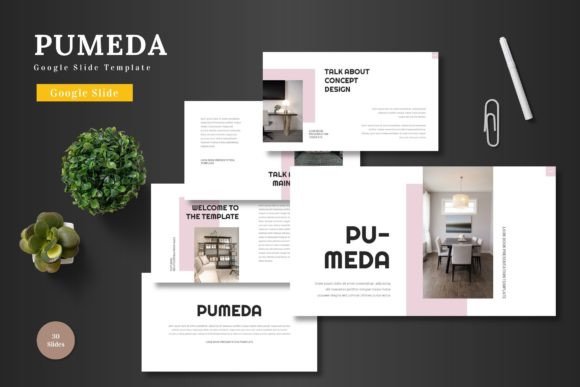
Evaluating the Pumeda Google Slides Template for Professional Presentations
In today's digital environment, professional presentations are a cornerstone of communication for businesses, educators, and entrepreneurs. Creating a visually compelling and structurally sound slide deck often requires significant design time or resources. The Pumeda Google Slides Template is a pre-designed solution aimed at addressing this need. It is a comprehensive template package offered for Google Slides, described as clean, scalable, colorful, and multipurpose.
What Is the Pumeda Google Slides Template?
The core offering is a set of editable slide decks within the Google Slides ecosystem. The primary value proposition is a ready-to-use framework. Users can input their content without starting from a blank canvas. The template emphasizes full editability within Google Slides itself, meaning all elements—shapes, colors, text—can be modified using the native tools of that platform. No additional software like Adobe Illustrator or specialized design applications is purportedly required.
The package includes a substantial number of slides, organized across five different premade color schemes. Each color variation contains a set of slides, with the total count being 150 slides. The structure includes dedicated sections, break slides, and specific slide types like galleries or portfolios. Key features highlighted include handcrafted infographics, pixel-perfect illustrations, and resizable graphics. The main deliverables are PowerPoint (.PPTX) files formatted for widescreen displays, which can be imported into Google Slides.
Potential Benefits and Key Considerations
For an individual or team evaluating this template, several potential benefits come to the forefront. The most apparent is time efficiency. A pre-built structure with placeholder text and image holders can drastically reduce the initial design phase, allowing focus on content creation and message refinement. The promise of complete editability within a familiar platform like Google Slides also lowers the technical barrier. Users comfortable with Google Slides can theoretically adjust every component without learning new software.
The inclusion of multiple color schemes and a large slide inventory offers flexibility. It provides options for different branding needs or presentation tones, from corporate to promotional. Features like animated slides and infographics aim to add visual dynamism and data clarity, which can enhance audience engagement. Furthermore, using a template can help maintain a consistent visual standard across an organization, ensuring a professional look even for users with minimal design experience.
Tradeoffs and Practical Expectations
While the advantages are clear, several considerations must be balanced. First is the dependence on the template's underlying design. While editable, the starting point dictates the overall aesthetic and layout philosophy. Customizing it beyond a certain point—for example, radically altering the layout structure or illustration style—might require more effort than anticipated, potentially approaching the complexity of designing from scratch.
Another consideration is file format and workflow. The main files are provided as PowerPoint (.PPTX) formats. To use them in Google Slides, they must be imported or opened. While this process is generally straightforward, it can sometimes introduce minor formatting discrepancies between the two platforms. Users must verify that all editable features, especially animations and intricate graphics, translate correctly and remain fully functional within the Google Slides environment.
The sheer volume of 150 slides across five colors is a benefit but also a potential point of complexity. Navigating such a large set to find the most suitable slides requires time. It may lead to a temptation to use more slides than necessary, potentially affecting presentation conciseness. The utility of the template hinges heavily on how well its pre-made design—its color palettes, illustration style, and infographic formats—aligns with the user's specific brand identity and communication goals.
Situations Where Pumeda May Be a Strong Fit
The Pumeda Google Slides Template appears particularly suited for certain scenarios. For small businesses or startups without a dedicated design team, it offers a path to create investor pitch decks, product launch presentations, or e-commerce promotional materials with a polished look. The multipurpose claim suggests applicability across these contexts.
Individuals or teams requiring rapid turnaround on multiple presentations would benefit from the reusable framework. Once the template is customized with company logos and colors, generating new decks for different clients or projects becomes faster. Educators or trainers creating consistent course materials might also find value in the organized section breaks and portfolio slide formats.
For users who are proficient in Google Slides but not in advanced graphic design, the template unlocks a higher level of visual sophistication. The included infographics and resizable illustrations allow for creating complex data visuals without needing to build them manually.
When Alternatives Might Be Worth Considering
Despite its offerings, there are situations where other options might be more appropriate. Organizations with a strict, well-established brand guideline that deviates significantly from the template's five color schemes and design style may find customization too extensive. In such cases, investing in a custom-designed template from a graphic designer tailored to exact brand specifications could be more efficient long-term.
Users who require extremely specialized slide functionalities not commonly found in generic templates—such as intricate interactive elements, complex 3D models, or unique data visualization types—might need to look for more niche solutions or build their own.
For projects where the presentation platform is locked to PowerPoint (not Google Slides) and requires advanced features like certain macro integrations or specific PowerPoint animations, working directly with a native PowerPoint template, rather than one imported from .PPTX into Google Slides, could prevent compatibility issues.
Lastly, if the budget is extremely constrained and the presentation needs are minimal, the free default templates within Google Slides or PowerPoint, combined with basic design effort, could suffice. However, this tradeoff involves a significant investment of personal time for design.
Practical Decision-Making Insights
To determine if the Pumeda Google Slides Template aligns with your needs, conduct a practical assessment. First, define your core requirements: the number of presentations needed, the level of visual polish required, your team's skill level with Google Slides, and your brand's visual flexibility.
Second, scrutinize the actual feature set. Does "editable from a Google Slides shape" mean true, intuitive control over every element? Are the infographic styles suitable for your data? Is the widescreen format appropriate for your presentation venues? Verify the claim of no need for other software by considering if your edits will stay within the bounds of typical Google Slides operations.
Finally, consider the long-term value versus cost. If the template serves as a foundation for dozens of presentations over time, its value proposition increases. If it's for a single, one-off use, the benefit might be less pronounced. Compare it against other premium templates or design services, weighing the initial investment against the ongoing time savings and quality consistency it may provide.
In summary, the Pumeda Google Slides Template is a tool designed to streamline the presentation creation process. Its suitability hinges on a match between its predefined design assets and the user's specific needs for efficiency, flexibility, and professional aesthetics within the Google Slides platform. A careful evaluation of your presentation goals, design capabilities, and workflow will reveal whether it is a fitting solution or if exploring alternative paths is the wiser course.